How to Stay Grounded in Anxious and Uncertain Times

When life is uncertain, we can feel unmoored. A jarring conversation, an abrupt shift in someone's behaviour, or an unexpected piece of news can unsettle our sense of direction. When the stakes are higher - health concerns, job insecurity, or disruption in a close relationship - fear takes hold, and you may feel exposed and unsure how to respond.
This post provides a practical framework for times when anxiety tightens and the future feels unclear. It helps you steady yourself, sort what’s yours to act on, and move forward with more clarity.
The aim isn’t to suppress what you feel or force yourself into false calm. Your task is to meet the moment with steadiness, create space to think clearly, and define your room for manoeuvre without collapsing into panic or overreaction.
To do that, we first need to look at the role of emotions, not in theory, but in how they behave under pressure.
How Emotions Respond Under Pressure
Emotions are vital. They help you hold your position when something matters, sharpen your read of genuine threats, and draw your attention to what can’t be ignored. But when you are distressed, emotions typically take over the entire frame.
Because emotional signals fire before deliberate thought, they set the tone for how you interpret events long before you start analysing them. Emotions distort perception. Fear amplifies anger. Shame deepens disappointment. Sadness drains momentum. Your thoughts loop. You replay moments and over-rehearse imagined scenarios. You picture outcomes that have not happened.
In a heightened state, you end up thinking inside the emotion rather than about the emotion, which narrows your sense of what’s true. In this state, you respond to your own predictions rather than to what is actually happening.
The result often shows up in a range of stressed behaviours:
- harsh words or withdrawn communication
- impulsive decisions and reactions
- blunt attempts to regain control
- numbing or avoidance
Each reaction creates new friction, often deepening the original distress.
This is how a temporary emotional spike cascades into an ongoing cycle.
To break that cycle, you need a way to organise your experience so you can respond from a steadier position. That begins with separating your concerns (often, worst fears) from what you can actually influence or control (your reality).
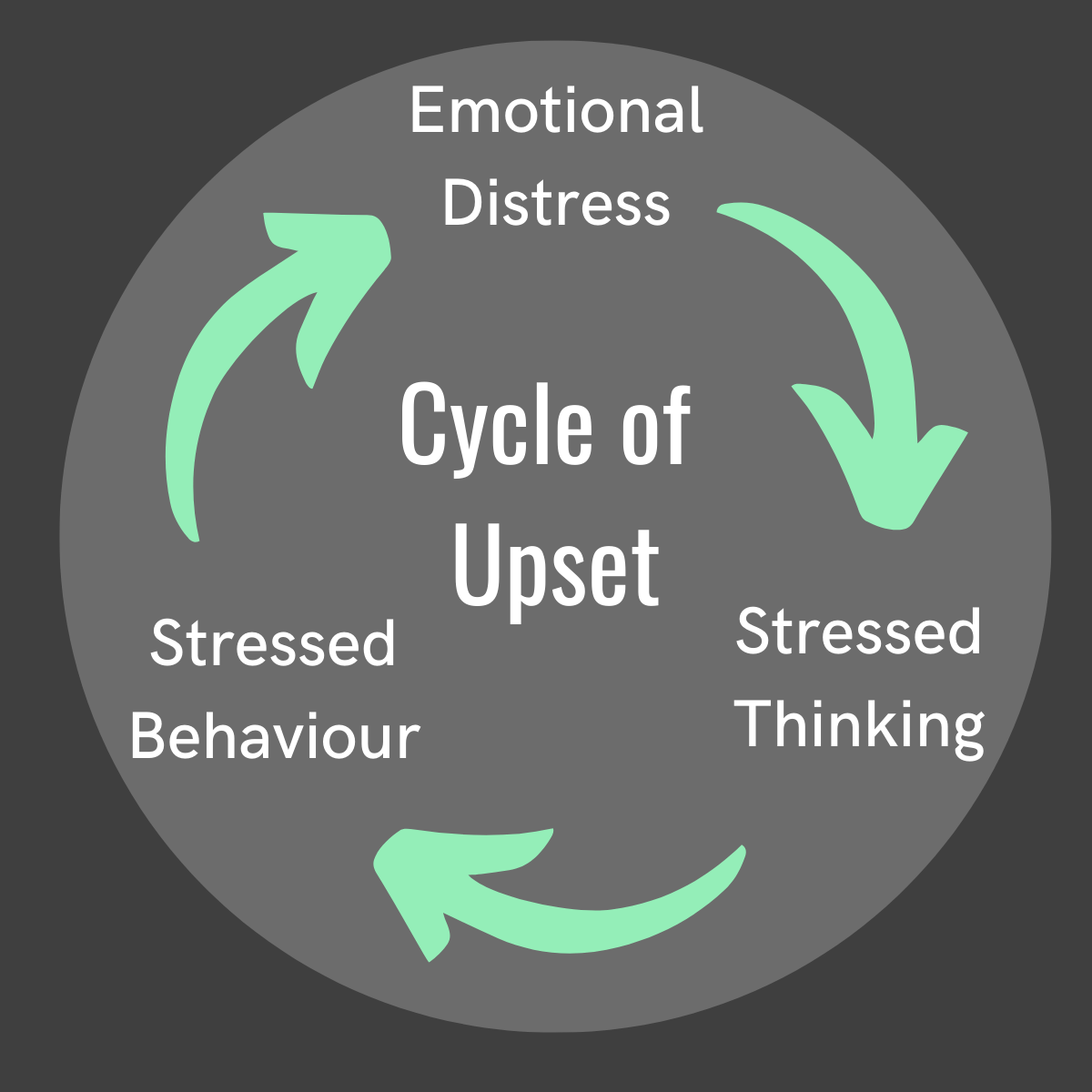
Emotions are powerful and essential. Without perspective, they can override your better judgment.
Jon: A Case Example
Jon had been under increasing pressure at work. The signs were subtle at first: tight deadlines, vague feedback, a growing fear of falling short. He found himself replaying conversations with colleagues and his manager, scanning for clues that something was wrong. The result was a hyper-vigilant and unsettled body and mind.
Unable to relax, the pressure leaked out at home. He snapped at his partner, poured a drink to soften the edges and then slept poorly. He woke up tired and distracted, which only fed his anxiety further.
His performance dipped. His confidence followed.
Jon was not the problem; the cycle was. He was caught in a loop where worry drove behaviour and behaviour drove more worry. To break the pattern, he needed to understand where his attention was going and how to direct it instead.
The task in situations like this is not to eliminate pressure, but to create enough internal steadiness to think clearly again: to slow reactivity, regain perspective and behave in a way that signals a sense of control. It's here that a helpful framework comes into play.
The Three Zones Framework
In any situation, you are operating within three zones:
- The Zone of Concern
- The Zone of Influence
- The Zone of Control
Most people feel overwhelmed because they spend too much time in the first and not enough in the others.
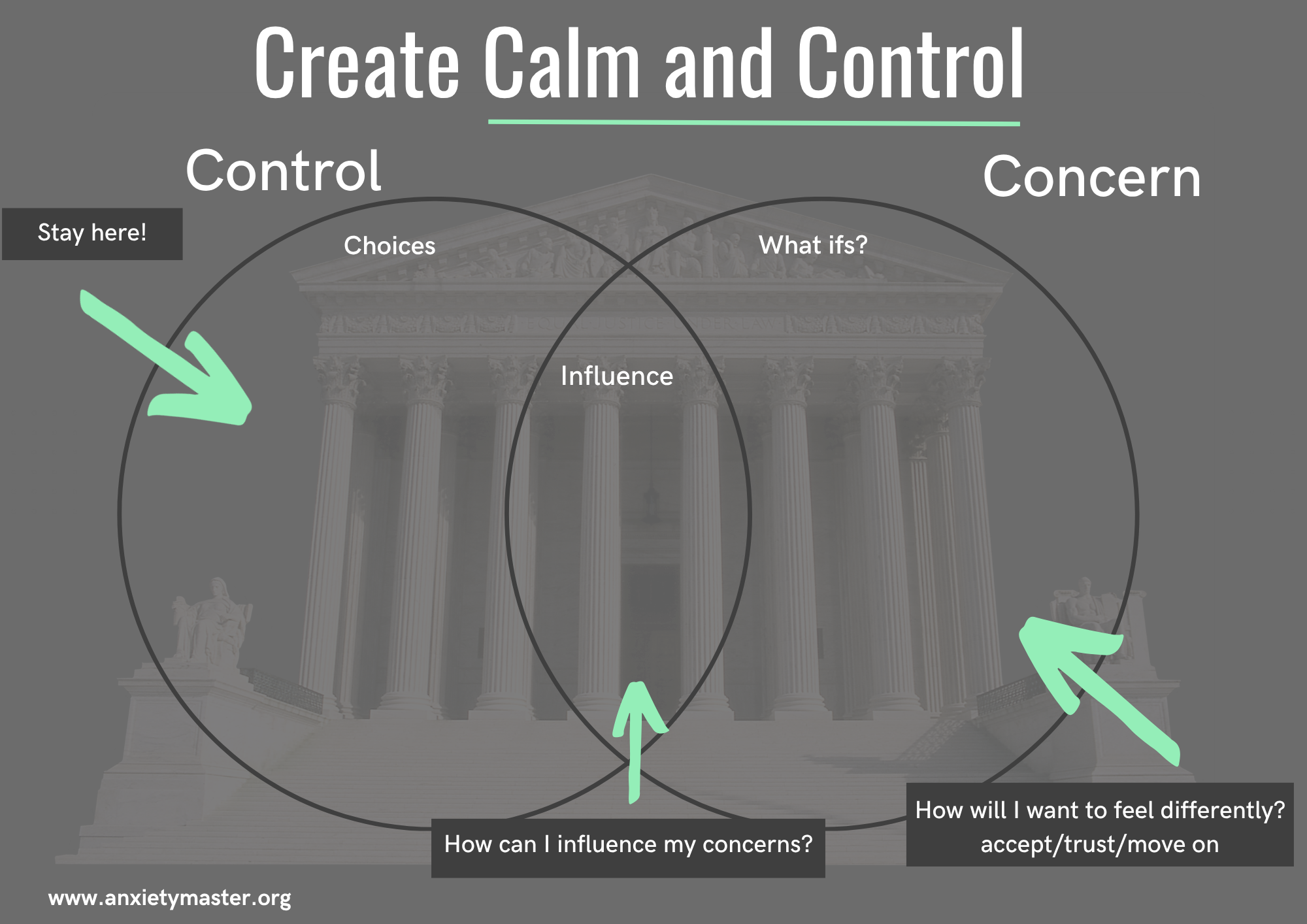
The Zone of Concern: Taming the “What Ifs”
This is the mental space absorbed by everything you worry about but cannot directly change.
Jon’s thoughts lived here:
- What if I’m failing?
- What if they’re planning to replace me?
- What if I’ve already ruined things?
The more time he spent here, the more activated and depleted he became. Anxiety spilt into his evenings, and rest dwindled. While he put on a polite mask at work, the strain was mounting and his reactions with loved ones sharpened. Consequently, he was alienating the very people he wanted and needed to keep close.
To interrupt the cycle, Jon had to shift his attention.

Questions for the Zone of Concern:
- What do I need to trust?
Jon: That one difficult week doesn’t erase years of competence. - What do I need to accept?
Jon: I can’t control how others perceive me. I can only stay engaged and ask for clarity. - What do I need to move on from?
Jon: From tying my sense of worth to one role, one week, or one person’s evaluation. My value is broader than this moment.
While these questions do not solve the situation, they acknowledge the fears and reduce the intensity enough to move your attention into a more workable zone.
By stepping back from the what-ifs? and focusing on what he could influence – his habits, his mindset, his next move – Jon began to shift. Recognising this limitation moved him from worry towards practical action.
The Zone of Influence: Where Momentum Begins
You can’t control everything, but you can shape how you show up.
Jon’s turning point wasn’t a solution; it was a shift in posture.
He named what was happening:
“I’m more irritable because I feel out of control.”
“I’m anxious because I haven’t slowed down in weeks.”
He reduced habits that worsened the cycle: He cut back on mid-week drinking and finished work at a reasonable time.
He communicated more openly. He spoke to a colleague and was honest with his partner, not to offload, but to be clear.
These were not dramatic steps, but they mattered. His stress no longer ran the entire system, and he became receptive to additional perspectives.

Questions for the Zone of Influence:
What pattern needs interrupting?
Where can I ask for clarity or support?
What slight shift would make today more workable?
For Jon, the pattern was clear: pressure, shutdown, irritability, disconnection. Even thirty minutes of protected time each evening and an honest conversation about his situation helped to stabilise him.
Influence is about traction, not control.
Small, steady changes here often move things more than big emotional gestures.
The Zone of Control: Where Steadiness Lives
This is the quietest and most powerful zone.
You can’t control outcomes, other people’s behaviour or future events.
But you can control:
- attention
- breathing pace
- posture
- the next small action
- how you meet the moment
This is where emotional steadiness begins.
Jon learned to recognise the early signs: a tight jaw, shallow breathing, looping thoughts.
Instead of pushing through, he paused: one slow exhale, a short walk, closing his laptop on time. Not to fix everything, but to steady himself enough to think.
Questions in the Zone of Control:
- What can I do right now to support myself?
- What small habit helps me feel more centred?
- What does calm action look like today - one thing, not ten?
This zone does not remove pressure. It prevents pressure from determining your behaviour and helps you stay grounded in your responses.
Staying Grounded in Anxious Times: Bringing It All Together

Jon’s experience is common. Under strain, most people drift into the Zone of Concern. If they stay there, anxiety takes the lead and rational perspective falters.
The shift begins when you redirect attention from concern to influence, interrupting the pattern, and from influence to control, reclaiming your capacity to respond.
Emotional steadiness doesn’t come from force or self-talk.
It comes from staying close to what is real: naming what’s happening, accepting what you can and can’t control and acting where you can.
A Final Note
If this article chimed with your circumstances, consider one small question:
What is one action I can take today that supports me, rather than depletes me? It does not need to be large. It only needs to be deliberate.
Before you move on, take a moment to notice where your attention has been sitting today. Has it stayed in concern, drifted into influence, or settled in control?
A subtle, deliberate shift toward steadier zones can change the texture of a difficult day. Choose one shift you can make now, and let that be your anchor.
If you’d like something steady to listen to, the Reducing Stress for Calm and Confidence audio series offers short, calming sessions you can use anytime.